Arenal, Costa Rica
March 21, 2020
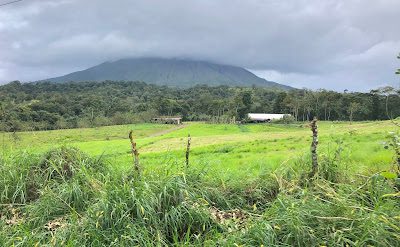
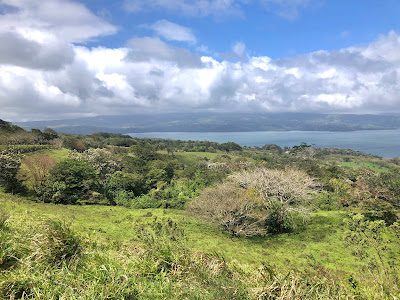
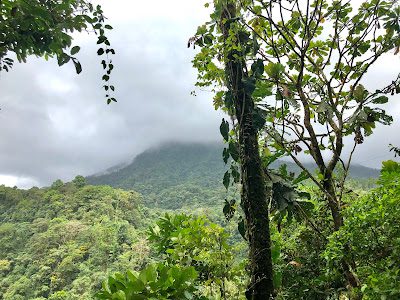
After staying several days in Potrero we drove to La Fortuna, which is in the middle of the country, at the base of the Arenal Vocano. This is the best picture I could get of Arenal because there was constant cloud cover.
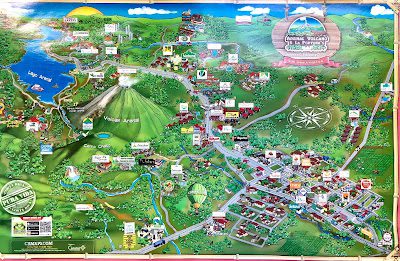
Map of Arenal, Lake Arenal, and La Fortuna
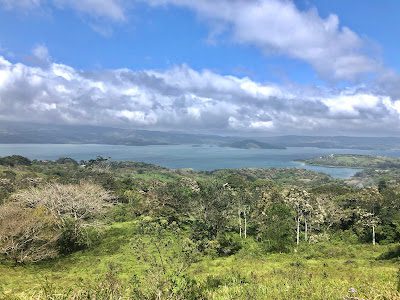
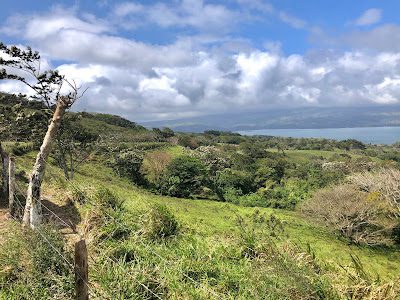
Although newly paved, the curvy narrow roads through the mountains were a little treacherous.
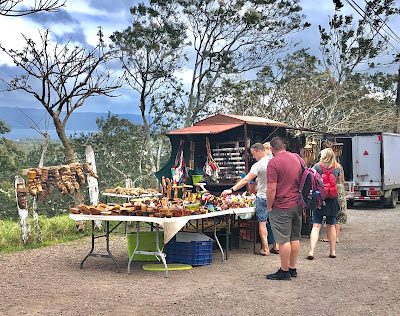
Midway through our four-hour drive to La Fortuna, there were vendors at the top of a mountain road selling their crafts.
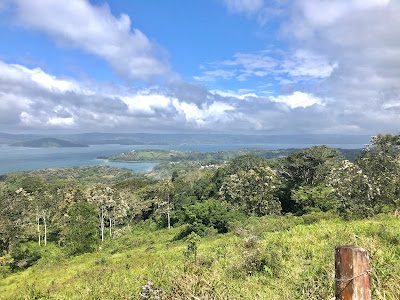
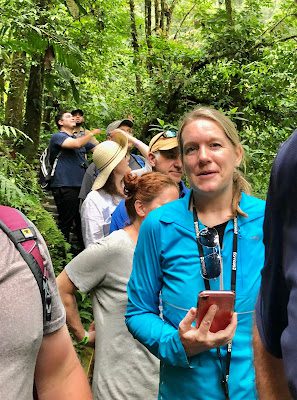
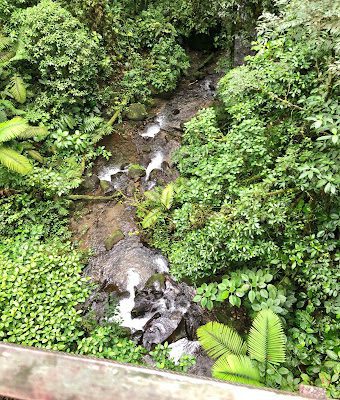
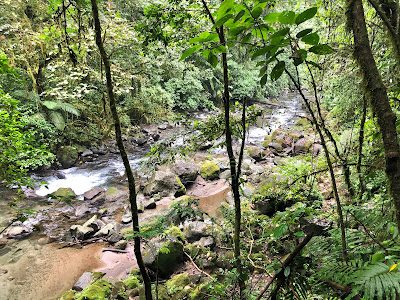
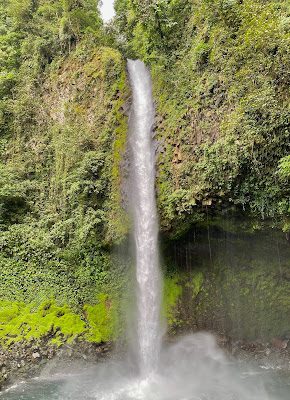
where we hiked down to La Fortuna waterfall.
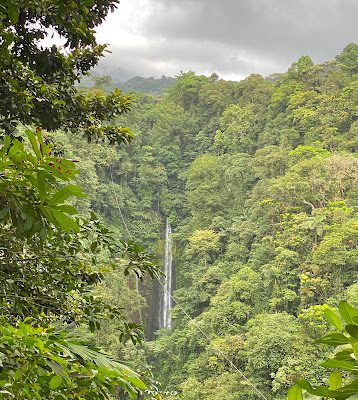
La Fortuna Waterfall from a distance
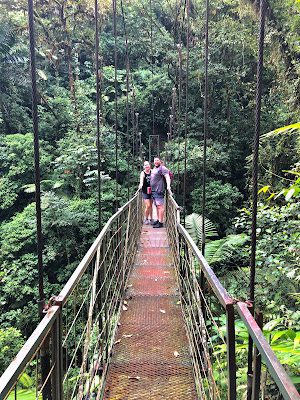
Matt and Brei
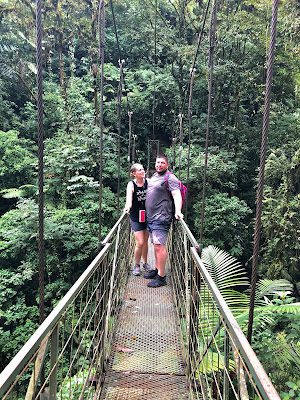
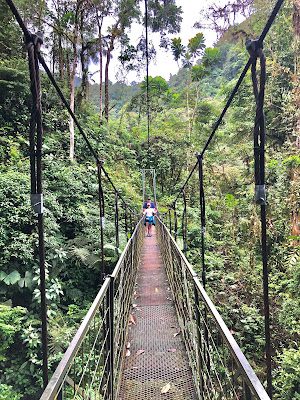
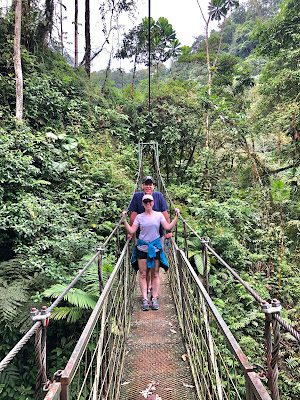
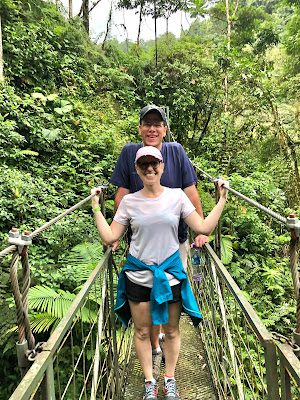
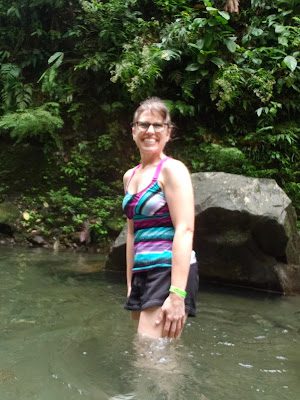
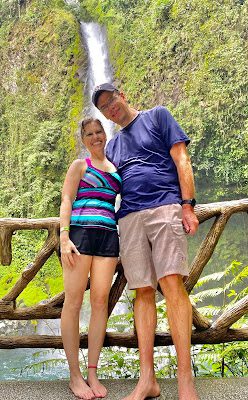
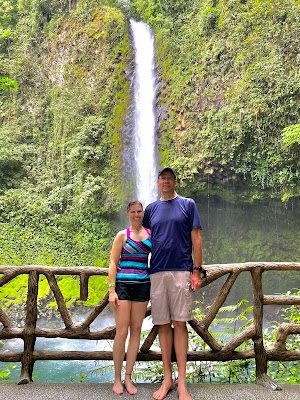
Brad and me
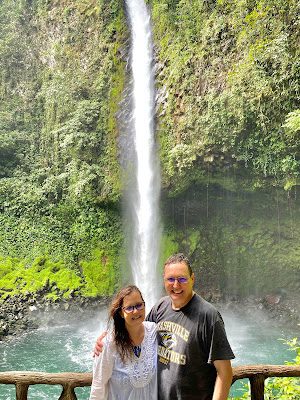
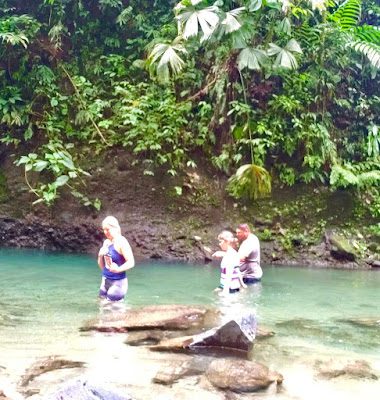
Debbie and Les
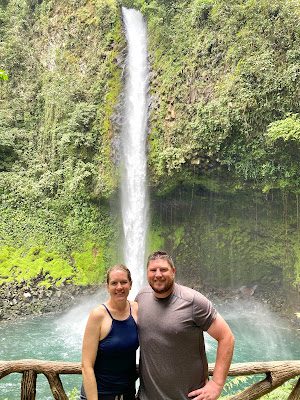
Brei and Matt

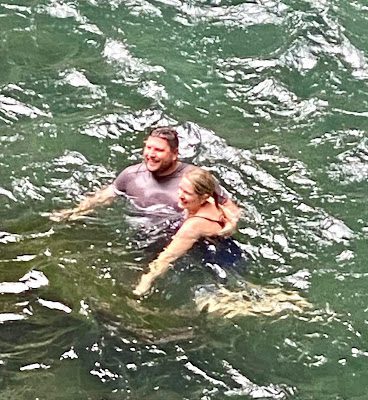
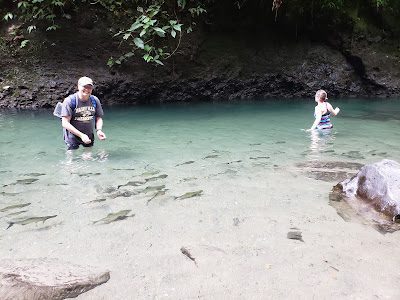
Matt and Brei swimming near the falls
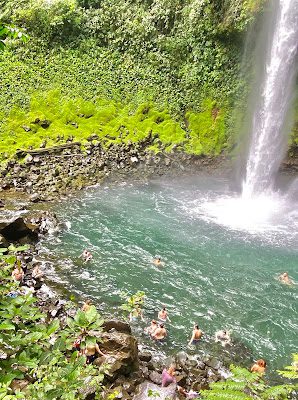
The rest of us, except for Brad, also tiptoed over the slippery sharp rocks and jumped into the cold water!
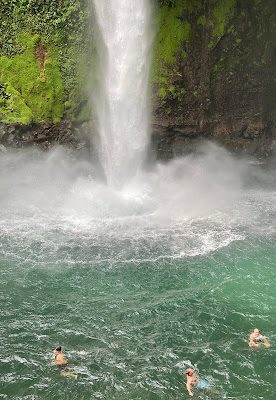
But you couldn't get very close to the falls because the current was so strong, it would just push you away.
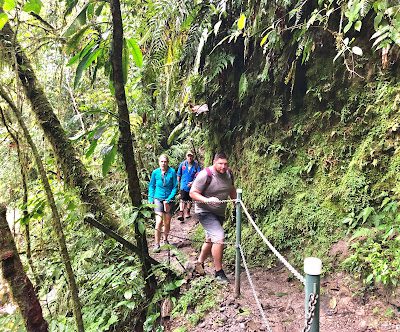
After spending a good amount of time at the falls it was time to hike back up the steep trail to the top.
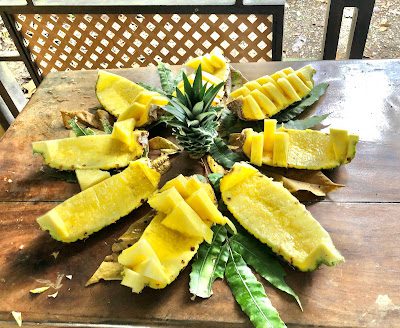
Our guides had freshly cut pineapple waiting for us!
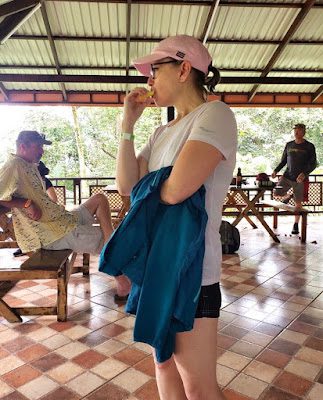
I ate as much as I could because I am so obsessed with pineapple. Our guide told us that the pineapple we eat in our grocery stores in the states are picked green and then sprayed with chemicals before being shipped in boats so by the time they get to the stores they are "ripe". But Costa Rican pineapples are ripened the right way...with natural sunshine (no wonder they taste so good!)
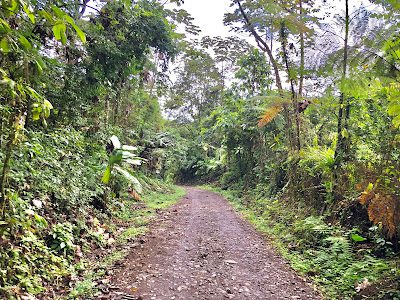
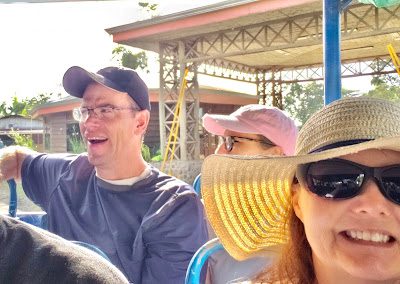
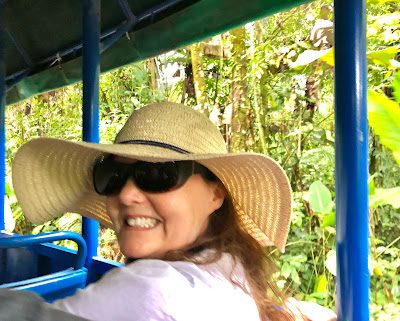
we took a scenic tractor ride and nature walk through the jungles of Arenal,
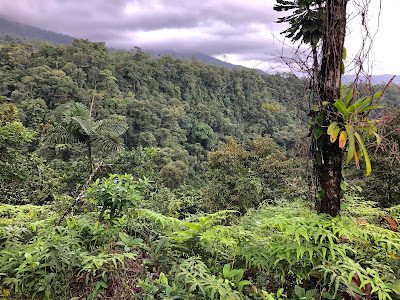
to the dwelling of the Maleku Indian tribe, which still exists today.
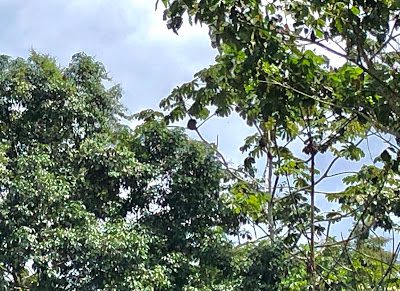
On the way we saw many different animals like wild turkeys, and sloths (the black dot in the middle of the trees is a sloth sleeping).
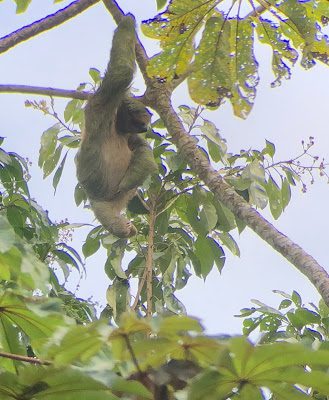
Another sloth that was just hanging around scratching himself (our guide said he was playing the guitar).
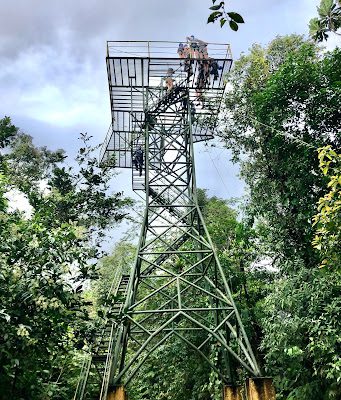
The "animals" at the top of this platform are called zip-lining-enthusiasts.
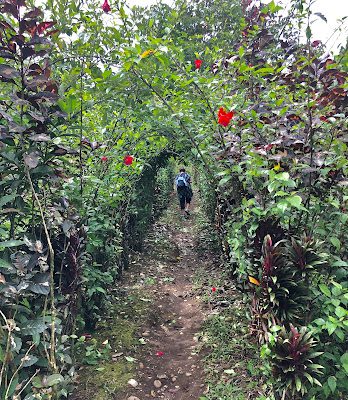
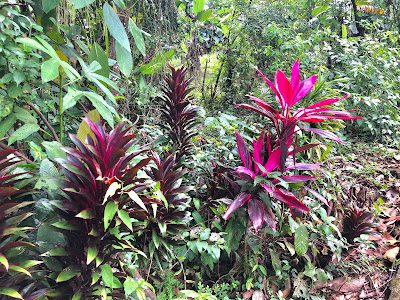
The trail was paved by the most beautiful tropical foliage...
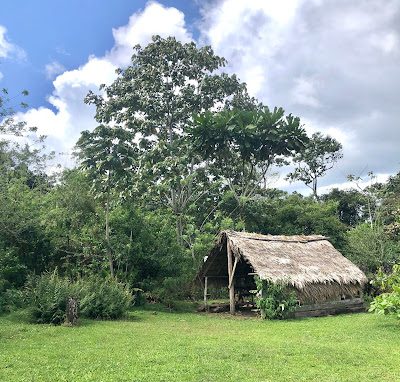
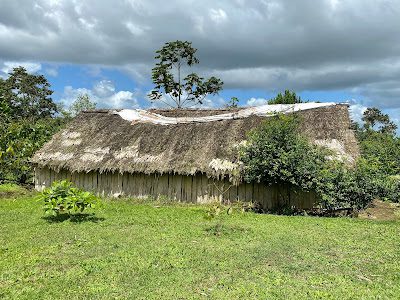
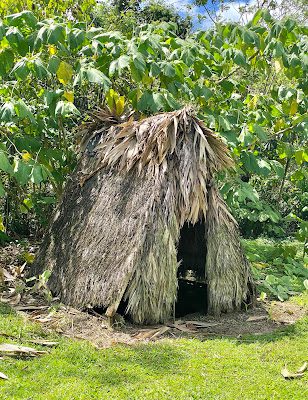
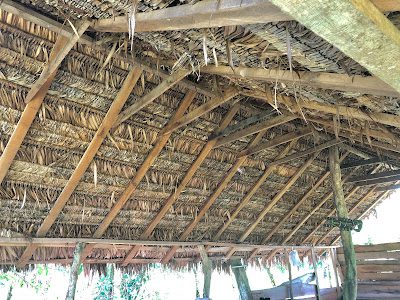
Interesting thatched roofs that served as shelter, for many years, from the frequent rains.
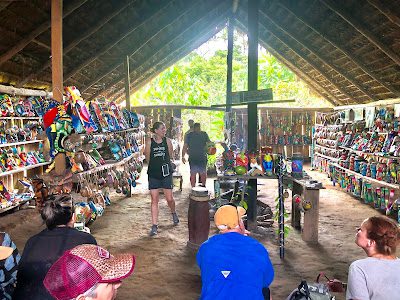
Matt and Brei walking into the main hut where we learned all about the Maleku people. This is also where they sold their carvings, which is how they make their living now days.
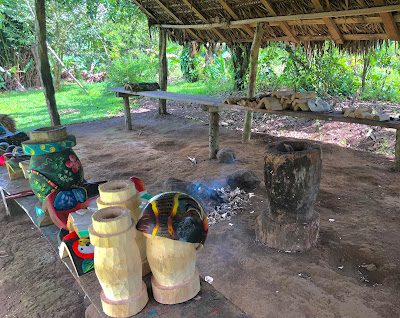
The hut where they carved, out of balsa wood (plentiful in this area and one of the lightest species of wood), statues, water bottles, bowls, and other brightly painted items...
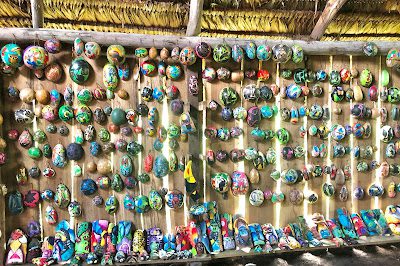
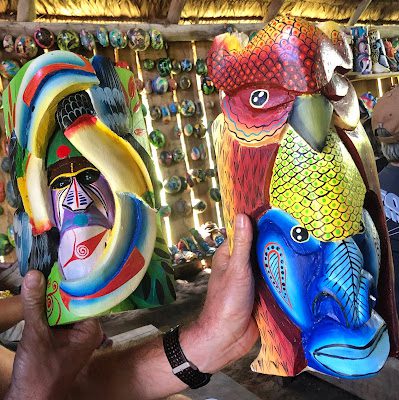
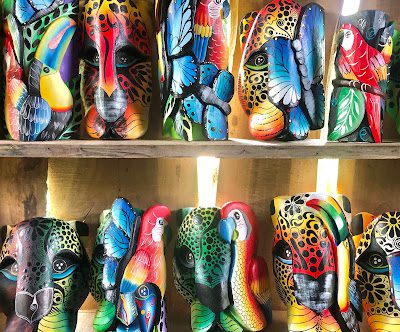
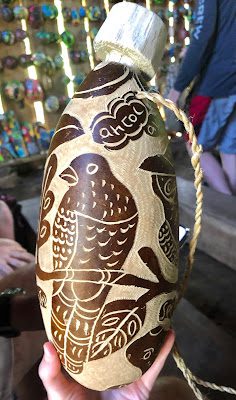
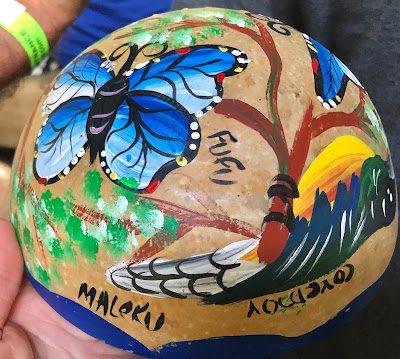
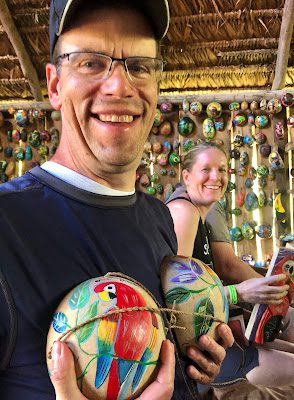
Brad demonstrating how these particular items were used
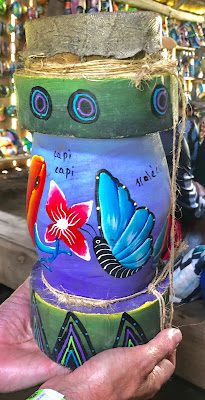
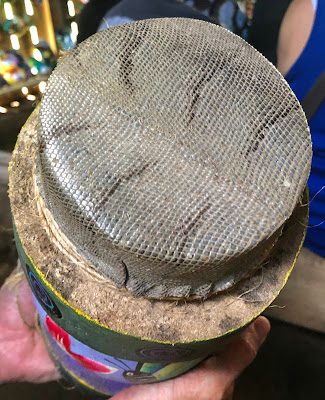
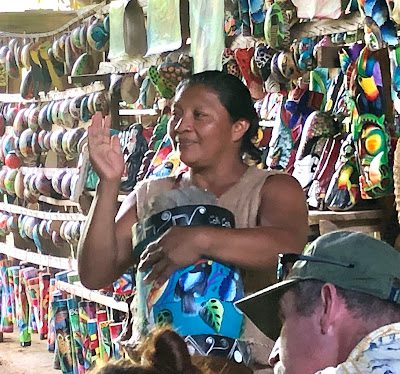
One of the women playing the drum
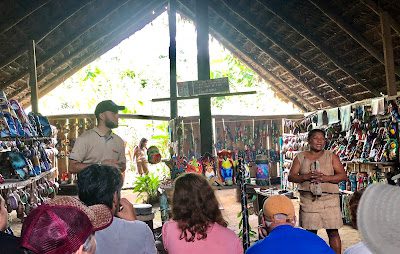
During the presentation our tour guide was the interpreter
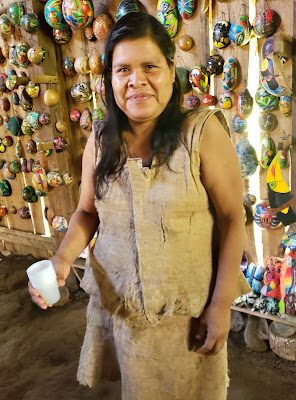
They then passed around some kind of mystery drink that they made there, and everyone was supposed to drink it after chanting something in the Maleku's native tongue (luckily they gave us water after someone in our group said we didn't drink alcohol)
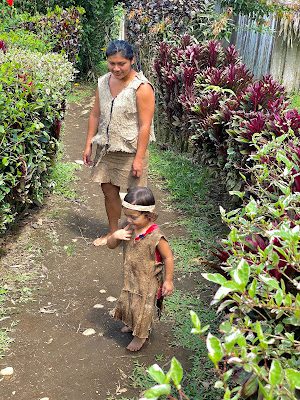
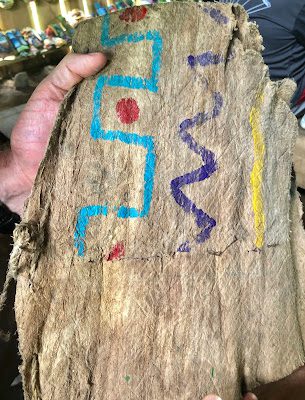
The clothing was made from the bark of a tree
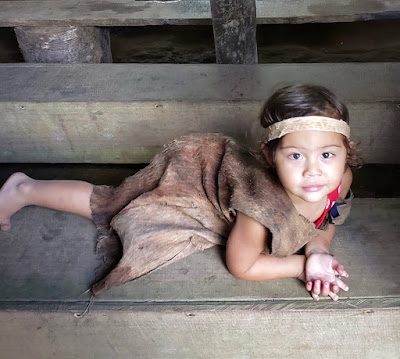
It was so interesting learning about the Maleku tribe, and seeing what life would be like living on the side of a volcano!